


Last week I sat in on a webinar with Elena Verna, the Head of Growth at Lovable, and members of the SuperInterviews team, JB and Kasey. The topic was how to land roles at these top-tier hyper-growth tech companies, but what followed wasn’t the usual interview-prep advice about STAR stories and thank-you emails. It was something sharper, more candid than what I’ve seen come from other SAAS webinars, and it connected to something I’ve been turning over for a while now.
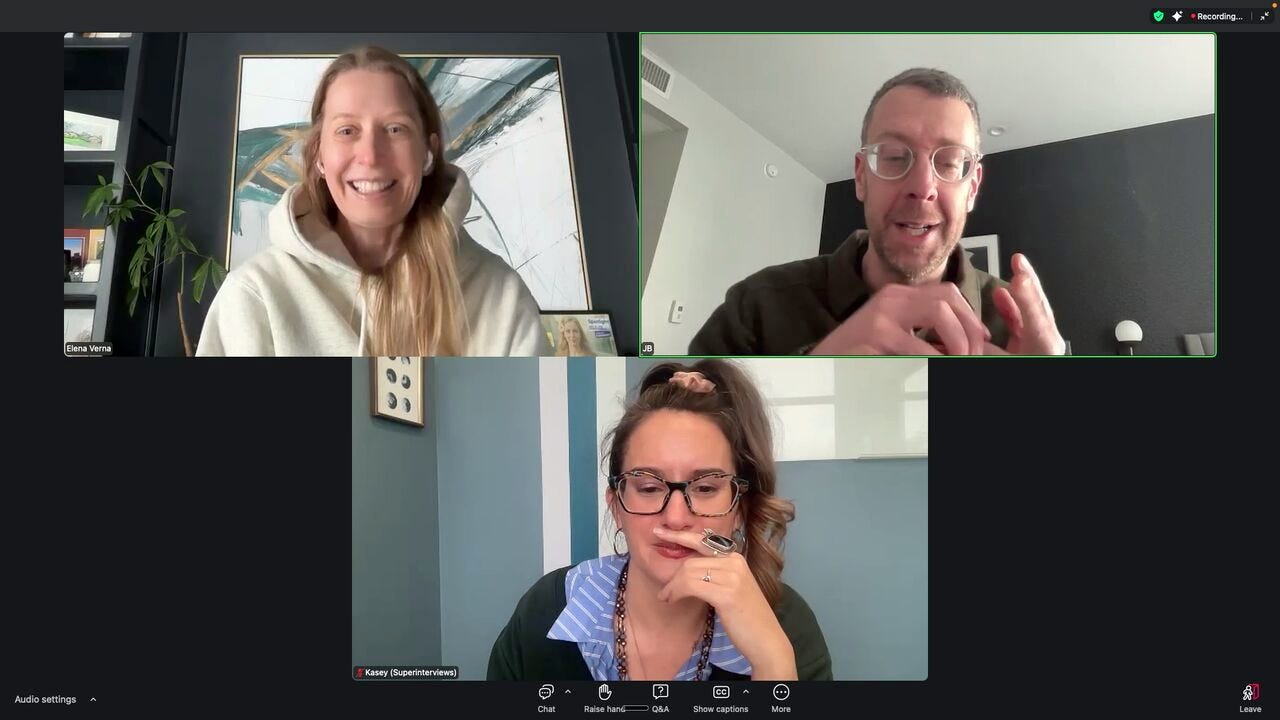
Elena said something that has stuck with me for the days since: AI is “average intelligence.”
Not artificial. Just average.
She meant it descriptively, not dismissively. AI does the work that’s already been written about, already been modeled, already been done enough times that a pattern exists. It handles the mean. The median. The middle of the distribution. And it does it fast, cheaply, and well enough that the bar for what is “acceptable” has forever shifted up and to the right.
That’s not news if you work in digital, marketing, or product. We’ve watched it happen to content in real time. A creative director told Marketing Dive last year that AI output is “trending toward the median”; every brand producing the same competent, interchangeable, aggressively ‘fine’ work. I wrote about this in “The Authenticity Premium”: Merriam-Webster chose “slop” as their 2025 word of the year because we all recognized the texture of AI-generated adequacy. The perfectly average.
What I didn’t have the right words for until Elena’s webinar is that the same collapse is happening in hiring. I had certainly felt it, had witnessed it, read anecdotes about it. But hearing it directly from one of the voices that I have followed and respected for a long time was refreshing. Validating.
The Floor Went Up. The Ceiling Didn’t Move
Just think about what a marketing or growth candidate could produce five years ago versus today. A cover letter took an hour. Company research meant browsing the About page and maybe reading a 10-K. Interview prep was googling “common behavioral questions”, re-reading those pinned articles from HBR, and rehearsing in the shower, then recording it, then practicing over and over again.
Now? AI drafts the cover letter in seconds. It summarizes the company’s competitive landscape, recent earnings, product roadmap, and Glassdoor sentiment in a single prompt. It generates twenty STAR story variations and scores them against a rubric. It tailors your resume to each job description and optimizes for ATS parsing. I’ve even role-played mock interviews with Claude to have it help me identify where my own answers were thin.
Every candidate has access to this. Every candidate who’s paying attention is using it. Which means the floor — the minimum quality of a prepared candidate — has gone way, way up.
But here’s the problem: when the floor rises, the stuff that used to differentiate you becomes table stakes. Your well-researched company overview? That’s the floor now. Your cleanly structured behavioral answers? Floor. Your ATS-optimized resume? Floor. All of it is the median.
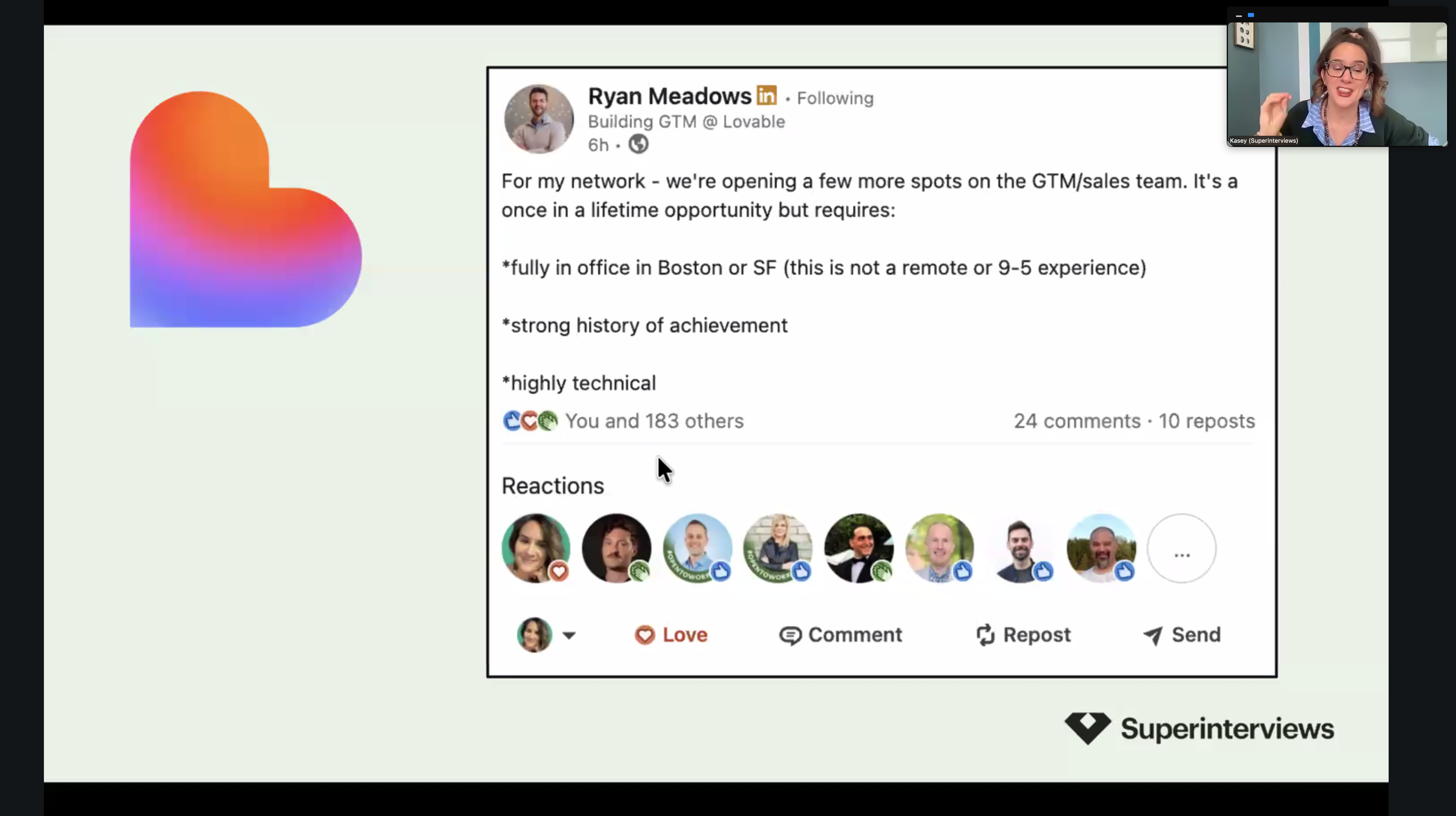
Elena was blunt about what that means at Lovable. She’s not hiring “big generalists.” She wants top-3% specialists with what she called a “founder mindset” — people who have one or two things they’re genuinely world-class at, and a demonstrated ability to stretch across disciplines using AI as leverage. Not people who are ‘pretty good’ at a lot of things. People who are extraordinary at that specific thing, and who use AI to handle everything else so they can spend more time being extraordinary.
This tracks with what I’ve seen on the hiring side of digital. The roles that are hardest to fill aren’t the ones that require breadth. They’re the ones that require depth so specific it’s almost eccentric. The person who understands retention modeling for subscription businesses at a granular, obsessive level. The growth marketer who can feel where the drop-off is in a signup flow before the funnel report loads pattern recognition is in part of their DNA. The content strategist who can explain not just what to write, but why this specific angle will resonate with this specific audience at this specific moment.
AI can’t fake that. Not yet, anyway, because that kind of expertise isn’t just knowledge gleaned from a dataset — it’s judgment formed from experience and context outside the lookback window. And judgment comes from reps, from failures, from the accumulated scar tissue of doing the work long enough that your pattern recognition operates below conscious thought.
When Every Answer Sounds the Same
Elena shared two of her go-to interview questions, and they were revealing — at least for me — not for the questions themselves, but for what they reject.
Prompt: You’re managing the Golden Gate Bridge’s revenue, the database is down, all you have is a blueprint. Estimate the revenue.
Objective: She doesn’t care about the number. She cares about how you navigate a constrained, ambiguous problem in real time. She explicitly said that “escape hatches” — “I’d go fix the database” or “I’d just count cars at the toll booth” — miss the point entirely.
Prompt: Lovable’s MAU is spiking, plateaus, then drops. Investigate.
Objective: She plays it as a live simulation, answering yes or no as you propose hypotheses. She’s watching for how you structure the investigation, not whether you guess the answer.
These case problems and live-thinking exercises have been part of senior hiring for decades — anyone who’s been through a Deloitte loop or a VP-level panel knows that. What’s changed isn’t the format. It’s the weight. Those unscripted moments used to be one signal among several. Now they’re practically the only signal that hasn’t been contaminated by AI prep. The rehearsed behavioral answer that used to indicate genuine preparation now indicates nothing more than access to a chatbot.
And this isn’t unique to Lovable. I’m hearing the same shift from hiring managers across growth and marketing. The STAR-formatted behavioral answer that used to be the gold standard now sounds like it was generated by ChatGPT — because it probably was, or at least polished by it (glass houses, of course). The signal-to-noise ratio has collapsed. Every answer is competent. Very few remain interesting.
For people in marketing and growth, this should feel familiar. It’s the same dynamic we see in brand differentiation. When every brand can produce competent content, competent campaigns, competent customer experiences — competence stops being the differentiator. What differentiates is the stuff that can’t be commoditized: taste, judgment, a point of view, the willingness to make a bet that the data doesn’t fully support.
Show the Work, Not the Story
Elena said something else that I think matters more than people realize: if you’re not a natural storyteller, you should be building artifacts that speak for you.
The default interview advice is to get better at storytelling. Practice your narrative. Sharpen your pitch. Learn to sell yourself. And that’s fine, it’s a learnable skill, and she acknowledged as much. But she offered an alternative that I think is more honest about how most people actually operate.
Build things. Real things. Then bring them with you.
A portfolio site built in Lovable if you’re applying there. A case study with actual numbers. A campaign you conceived, executed, and measured — documented with enough specificity that a hiring manager can see the decisions you made and the judgment you applied. Not “I led a cross-functional initiative to optimize blah blah blah.” The specific problem. The specific action. The specific result. With live links that aren’t gated.
“I may not be able to say it clearly, but I can show my work and my work can speak for itself.”
I keep thinking about this in the context of marketing careers specifically. We’re in a profession that’s supposed to be about communication, but some of the best marketers I know aren’t these big charasmatic talkers. They’re great thinkers. They’re great executors. They see things in data that other people miss. They build campaigns that work because of an insight, not a pitch.
Those people are at a structural disadvantage in a traditional interview. But they don’t have to be. If they have the artifacts.
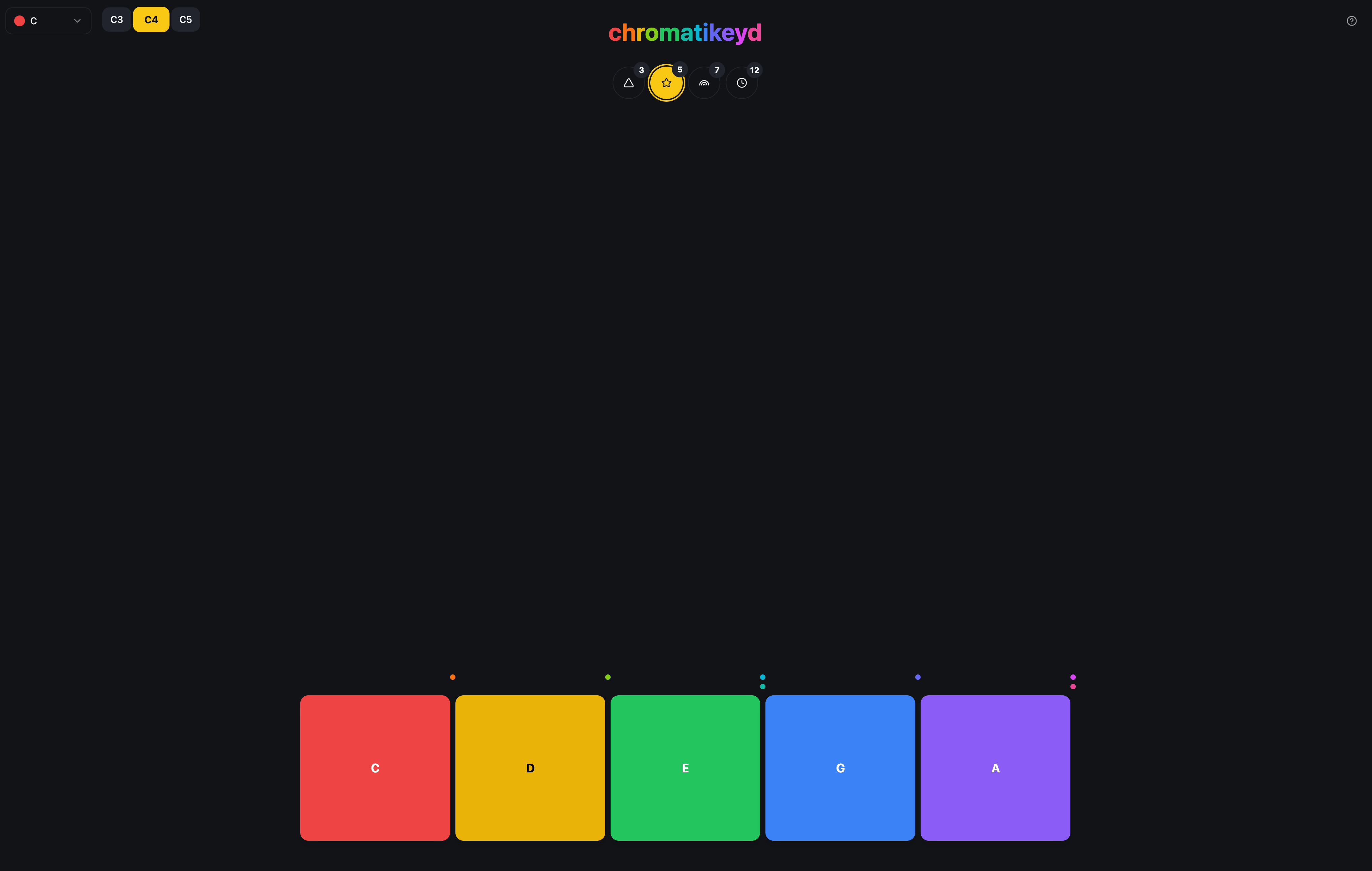
And here’s where AI actually helps instead of hurts. Use it to build the portfolio faster. Use it to structure the case study. Use it to prototype the thing you’d propose if you got the role. Fix a problem, any problem, like a custom keyboard tool to help your child learn scales. The AI handles the production; you provide the insight, the taste, the judgment. It’s a pairing Elena kept returning to: “AI did X; I did Y.” X is the median work. Y is the thing that makes you worth hiring.
The Role Doesn’t Exist Until You Do
The last piece of Elena’s argument that was extremely validating, and mirrored my preferred approach to building out a team: the roles actually get filled at companies like Lovable are often never posted. They’re created around the talent.
Someone ships visible work. Someone writes something sharp on LinkedIn. Someone builds a project that catches the attention of someone at the company. Then an intro happens. Then a conversation. Three months later there’s a role that didn’t exist before, and it exists because a specific person made it obvious that the company needed them. Doesn’t that sound familiar?
This is how the best roles have always been filled, but it used to be a nice-to-have. Now it’s closer to essential — especially in growth and marketing, where the number of candidates who can clear the “competent” bar has exploded thanks to AI. When every applicant can produce a decent resume, a decent cover letter, and decent interview answers, the way to stand out isn’t to be marginally better at the game. It’s to change the game. To be the person who was already doing the work, publicly, before the role existed.
I’ve written before about how the brands that will win are the ones that invest in trust as an operational reality, not just a marketing claim. The same logic applies to careers. Your “personal brand” isn’t your LinkedIn banner or your headline. It’s the accumulated evidence that you do real work and think real thoughts — visible, specific, and yours. I’d be lying if I said that’s not exactly what I’m attempting to do here with dgtl dept*.
What This Means if You’re Looking
I don’t want to turn this into a listicle. But I also don’t want to leave this purely abstract when there are those of you who may be reading this who are actively searching, actively interviewing, actively trying to figure out what to do differently.

So here’s what I’d do, and am doing, now:
Build something. You already know the pairing; “AI did X, you did Y”. So use it. Don’t describe the campaign you’d run, prototype it. Don’t talk about an onboarding flow you’d fix. Build one. Even if it’s for your tarot-card reading cat.
Be honest with yourself about what your superpower is. Not good at. Not experienced in. World-class. And if you don’t have a clear answer, that’s the real work — not more interview prep, but more focused skill development until you can credibly claim a vertical superpower.
Stop optimizing for logos and start optimizing for fit. Hypergrowth environments like Lovable are chaotic by design — constant change, minimal structure, high autonomy. That’s paradise for some and hell for others. Neither is wrong. But if you spend six months fighting to get into a company whose operating model makes you miserable, you’ve won the wrong game.
Network equity is built before you need it. Not during. Not after. Before. Help people. Share what you’re learning. Connect others. Ship in public. The warm intro that gets you into the room for the role that doesn’t exist yet — that intro only happens if someone already knows your work.
None of this is comfortable. The old game was hard enough, and this new game asks you to be more specific about who you are, more visible about what you can do, more honest about what you’re actually extraordinary at, and thereby, more vulnerable.
But keep in mind that the new game also rewards something that the old game never quite did: being genuinely, specifically, irreplaceably good. Not average. Not median. Not the person AI could have been instead.
The bar moved. Are you moving with it?


Did you enjoy this newsletter?
Please like it by clicking on the ❤️ at the very top or bottom of this post. This really helps get this newsletter recommended to Substack’s recommended shortlists.
Thanks! What if median becomes the standart for everything?